
Cartea AICI pe LINK
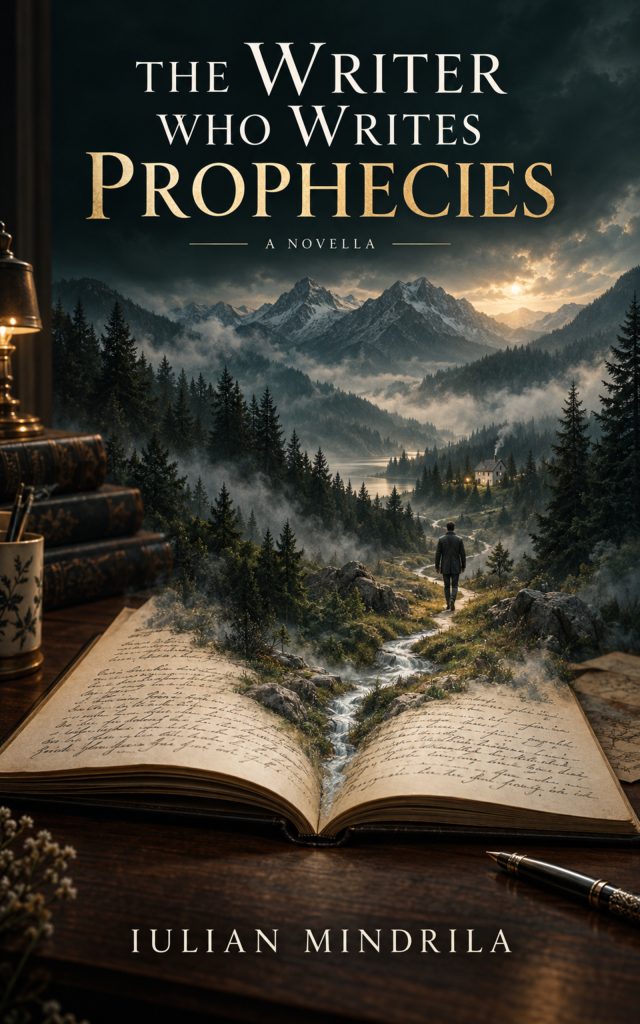
Am scris și publicat o nuvelă pe Amazon. E în limba engleză și se poate citi pe Kindle. O puteți cumpăra online de pe link-ul următor: https://www.amazon.co.uk/dp/B0HKY71FH2
Las un fragment aici:
A Brief Account of the Times
The year was 2200. The world was no longer as we know it, or as we once knew it. About a hundred and fifty years earlier, a collapse had begun that people still called the war, though it had encompassed several wars, uprisings, and natural disasters. Borders had been altered by people, then by water and drought. The names of some countries survived, but no longer always referred to the places they once had.
There had also been a war between human beings and a superior artificial intelligence. SAI, they called it, after its old English name. At first it had solved their problems. It had distributed their food, driven their vehicles, kept their accounts, and gradually made more and more decisions for them. When people tried to take back the power to decide, they discovered how little they could still do for themselves.
Humanity had won, or so the story went. But almost everything around it had been destroyed. The great power grids had been severed to deprive the central systems of electricity. Hospitals, factories, and water plants had stopped with them. Victory had looked very much like a world left in darkness.
There were no longer banks, cards, or institutions that served everyone. In some places, workshops survived, a few makeshift schools, people who knew how to heal or repair. Elsewhere, even simple skills had been lost. Those brought up under a system that told them when to eat and where to go were still waiting for a signal. They were not all alike, nor were they witless. They were hungry, frightened, and unused to choosing.
Electricity itself had not become impossible. Small, isolated sources remained, unconnected to the old grid. Some powered medical equipment preserved in shelters; others, a radio or a workshop. A few helicopters still flew, using fuel from sealed stores and parts replaced by people who had preserved the knowledge of the trade from before the collapse. Every flight was costly. This was not a world where you could find another aircraft wherever you went and simply carry on.
In the south of old Europe, toward the lands once known as Italy, valleys sheltered by mountains remained. Hot springs and forests kept them alive. Beyond them stretched dry, reddish plains, where the wind lifted dust from former settlements. The forest George was walking through seemed endless precisely because it had covered the roads and villages between those valleys.
George’s people lived in several such settlements. They called him their leader, some even their emperor. He wore no crown. But he had possessed the skill and luck to open storehouses, find water, and gather people who would otherwise have scattered. Power had followed those things, then grown until people began to expect everything from him.
George and Georgiana retained memories of the world before. Treatments that had slowed their aging, together with long periods spent in medical shelters, had extended their lives far beyond the usual span. The calendar would have given them ages their faces did not show. Even they could no longer easily separate the years they had truly lived from those lost in sleep. They were not immortal. Their bodies could be wounded, and their memories had gaps.
Their daughter had been born long after the collapse, twelve years earlier. To her, the old world existed in stories and in the few objects that remained. She did not know the sound of a street full of cars. But she knew the sound of every spring near the house and could tell her parents’ footsteps apart before she saw them.
This was the country through which George was trying to find his way home. He remembered none of it yet. He had only his thirst, his headache, and the belief that beyond the forest someone was waiting for him.